Location
North Sea · Offshore
Application
Refrigeration retrofit
Availability
> 99 %
Service interval
3 years
Project overview
A retrofit that expands what’s possible for offshore platforms.
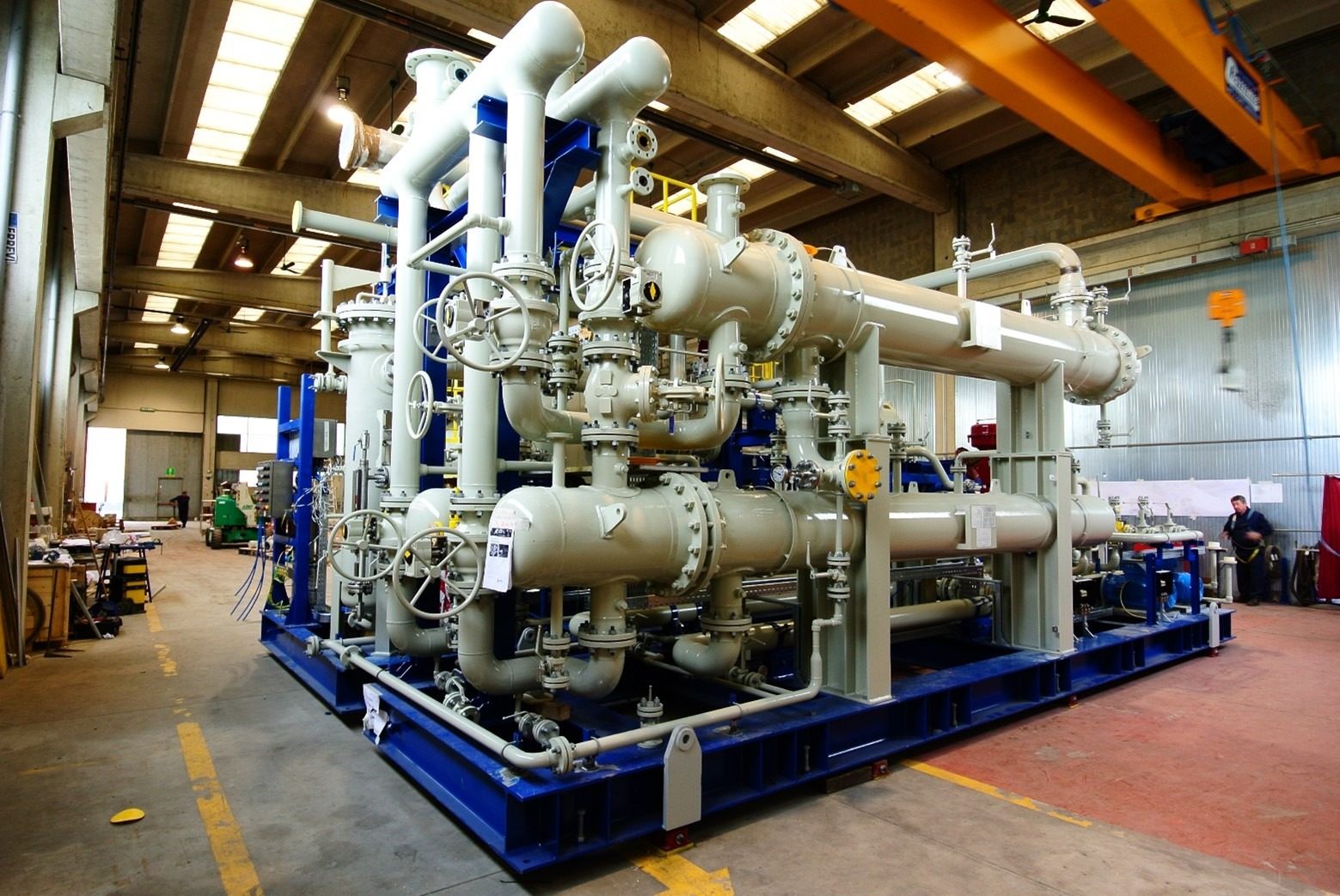
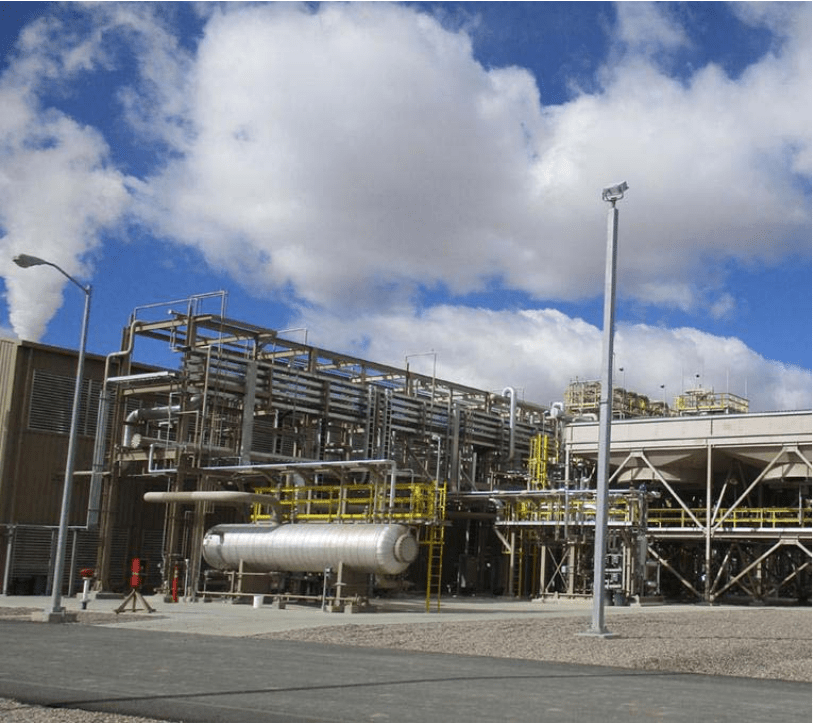
Technofrigo by Clauger’s Process, Gas, and Energy (PGE) team engineered a retrofit refrigeration solution for an offshore natural-gas drilling and production platform in the North Sea. The project required replacing aging centrifugal compressor technology with a compliant refrigerant system meeting stringent European F-gas regulations — all within the severe space, weight and logistical constraints of an offshore environment.
The client
An independent global energy company operating in the United States, Europe and Africa, focused on unconventional resource utilisation. The client required timely installation of a replacement refrigeration package that would deliver performance, cost savings and maintenance advantages over the existing system.
Why refrigerant choice matters offshore
The type of refrigerant directly affects mandatory periodic check frequency. For offshore installations with significant maintenance and repair constraints, selecting a compliant refrigerant with extended inspection intervals is critical to operational efficiency and cost control.
The challenge
Compliance, reliability, and offshore constraints.
Regulatory & environmental
- Compliance with stringent European F-gas regulations
- Non-flammable refrigerant with GWP below 2500
- Zero Ozone Depletion Potential (ODP)
- Extended maintenance intervals to reduce offshore inspection frequency
Offshore installation constraints
- Severe space limitations — retrofit within existing module footprint
- Weight restrictions — optimise for lifting and installation
- Transportation logistics — design for offshore delivery and installation
- Vibration control — account for platform vibration and ambient factors
- Harsh winter access — limited helicopter and ship access complicates spare-parts supply
Reliability & availability
- Comprehensive RAM (Reliability, Availability, Maintainability) analysis
- FMECA (Failure Mode, Effect and Criticality Analysis) for critical components
- Complete spare-parts strategy for two-year operations and capital spares
- Target system availability exceeding 99%
Pre-shipment validation
- Complete string test with project-specific compressor, motor and lube oil circuit
- Four hours continuous operation at design speed
- Noise and vibration monitoring
- Verification of mechanical integrity and system functionality

Our solution
Oil-flooded screw & flooded evaporator — a first for offshore.
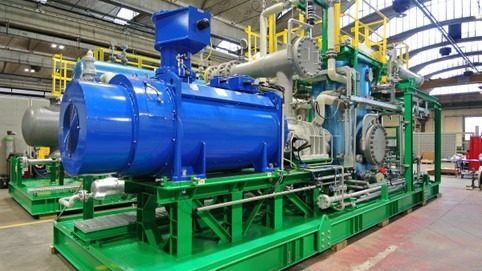
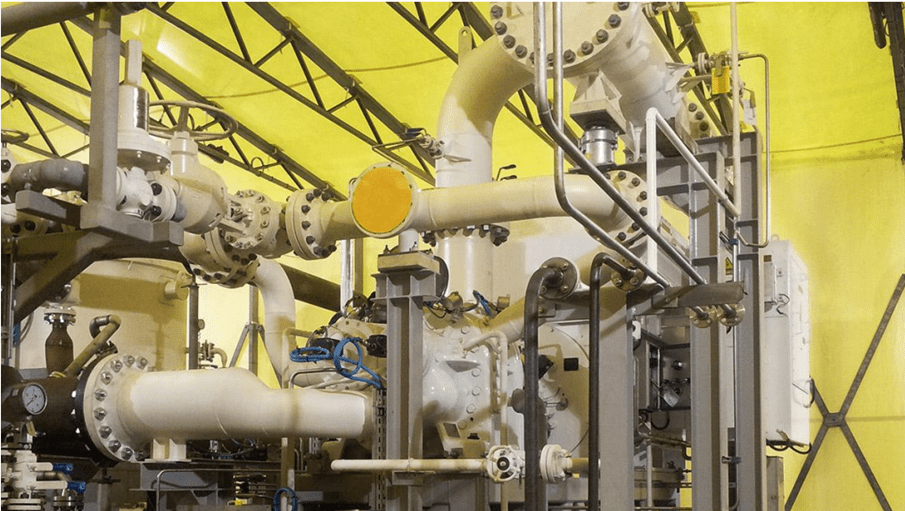
We replaced the existing centrifugal compressor technology with an oil-flooded screw compressor and flooded evaporator — a relatively new application of flooded technology that delivered multiple advantages.
Technical solution
- Oil-flooded screw compressor — proven technology adapted for offshore natural-gas processing
- Flooded evaporator — enhanced efficiency and performance for dehydration and dew-point control
- Compliant refrigerant — pure, chlorine-free, GWP <2500, zero ODP
- Double mechanical seal — reduces refrigerant leakage to atmosphere
- Double block and bleed isolation valves — on pressurised lines for safe maintenance
Advantages over the centrifugal predecessor
- Lower installation costs — reduced CAPEX vs equivalent-duty centrifugal
- Smaller physical dimensions — fits within existing module space
- Reduced weight — simplified lifting and installation
- Greater ease of maintenance — durable mechanical seal and simplified service access
- Extended maintenance interval — three-year typical service vs more frequent centrifugal
- High availability — >99% confirmed by RAM analysis
Engineering for offshore environments
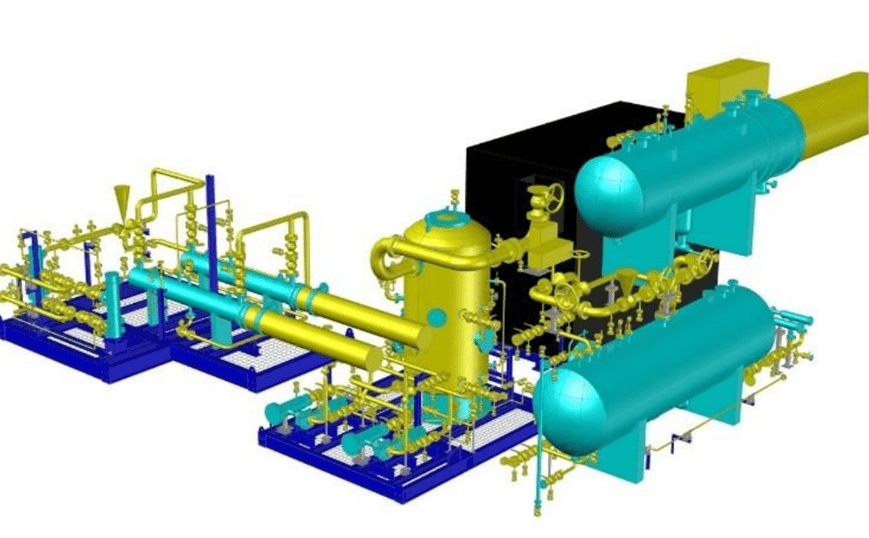
- 3D modelling — mechanical design supported and explained to client using 3D modelling software
- RAM/FMECA analysis — detailed reliability and failure-mode studies informing spare-parts selection
- Pre-shipment string test — four-hour continuous operation with full utilities
- Vibration and noise monitoring — validated acceptable levels during testing
- Weight optimisation — designed for offshore lifting requirements
Technical specifications
The numbers at a glance.
Performance and architecture in summary — full design dossiers available on request under NDA.
| Application | Offshore natural-gas processing refrigeration retrofit |
| Compressor tech | Oil-flooded screw (replacing centrifugal) |
| Evaporator | Flooded evaporator |
| Refrigerant | Pure, chlorine-free refrigerant: • GWP < 2500 • ODP = 0 (zero ozone depletion) |
| System availability | > 99 % (confirmed by RAM analysis) |
| Maintenance interval | Three years (typical for oil-flooded screw) |
| Safety features | Engineered for offshore service: • Double mechanical seal • Double block and bleed isolation valves |
| Pre-shipment testing | Complete string test — 4 hours continuous operation at design speed |
Project impact
What this installation actually delivers.
Impact 01
Regulatory compliance
Meets stringent European F-gas regulations with compliant low-GWP refrigerant.
Impact 02
High availability
>99% system availability minimises production disruptions on a critical offshore platform.
Impact 03
Extended service interval
Three-year service period dramatically reduces offshore maintenance requirements and costs.
Impact 04
Reduced CAPEX
Screw compressor technology delivers lower installation cost than centrifugal equivalent.
Impact 05
Space & weight optimisation
Fits within existing module constraints with reduced lifting requirements.
Impact 06
Expanded possibilities
Demonstrates oil-flooded screw + flooded evaporator as a viable architecture for offshore retrofits.
Working on a similar project?
Send us the broad strokes of your application — we’ll route your enquiry to the engineers who delivered installations like this one.